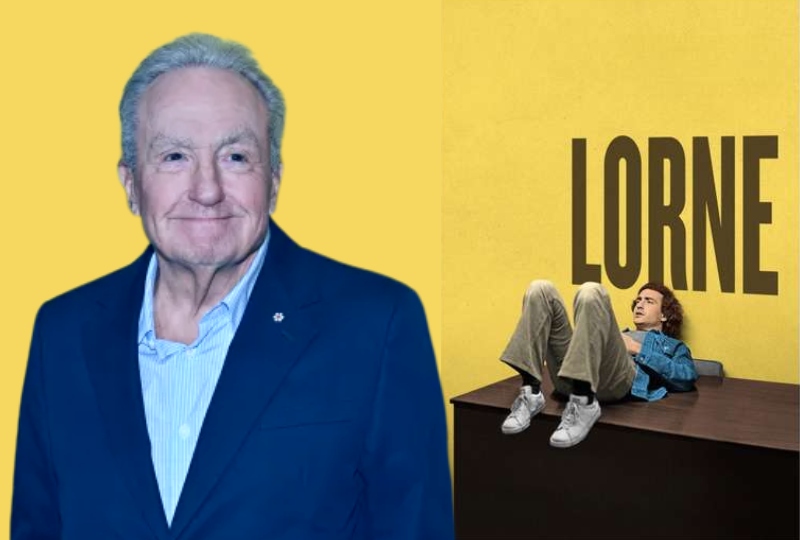
It’s notable that the many impressions of Lorne Michaels are more interesting than the man himself.
After decades building a television and production empire and achieving fantastic financial success, Michaels is basically a one-note figure. He’s the man behind the comedy; the powerful Palpatine-like figure mentioned in every memoir; the clever business mogul brokering deals so he can afford one more vacation home. He’s all that, but sadly, he’s not very interesting.
In Lorne, the latest film by documentarian Morgan Neville, the subject is Saturday Night Live’s longtime executive producer. While you won’t get any deep insight into the man’s personal life or history in the film, Lorne dis succeed in making me laugh and (surprisingly) cry.
The documentary is being shown now in select theaters nationwide. Presumably, given its production company, it will be streamed on Peacock eventually.
Neville spends much of his time showing the idiosyncratic habits of Michaels, who famously doesn’t report to the SNL office until at least 4 PM, and often spends his time schmoozing with celebrities and industry shakes/movers until the early hours of the morning. There we see his famous popcorn maker, and the fish tank that looms in his office. These things serve as set pieces for a subject that always remains out of reach.
Michaels is understated, droll, and always perfectly polished. Not until the last few minutes of this film does he say anything revealing. He’s sort of a statue to himself through much of the movie, in which Neville deftly manages to make hilariously funny.
This documentary is essentially a film about SNL. That’s because SNL is Lorne. And Lorne is SNL. The show has been sculpted in Michaels’ image. And everything, and I mean EVERYTHING we know about Michaels is through the lens of Saturday Night Live.
As narrator Chris Parnell says, “SNL is an x-ray of Lorne.”
We learn more in depth than ever how Lorne protects the show he co-created from the cruel cuts from the bean counters at the network. We see how Michaels has crafted a habitual schedule in his personal life, in part to counter the chaotic nature of a live TV show that changes incessantly from Monday to Wednesday, and even in the last moments before air.
Part of that routine is Lorne’s close friendship with Paul Simon, Steve Martin, and Alec Baldwin, all of whom appear in Neville’s film. We don’t learn anything deep about Michaels, but the joy these friends have at talking about Lorne tells us at least one thing: the SNL producer is respected.
If you want warts, you won’t find it in Lorne. Neville used the unprecedented access he was granted in Studio 8H as a celebration of the show and the way SNL has woven itself into popular culture.
Lorne is a funny documentary. We get Bill Hader, John Mulaney, Andy Samberg, and Fred Armisen at the same table, sharing stories about Lorne. We see iconic clips from the program, from Season 1 to Season 50. We see new cartoon segments of Saturday TV Funhouse, featuring former cast member and writer Robert Smigel as the voice of Lorne. We see Lorne making a few quips.
Surprisingly, in the last 10 minutes of Lorne, Neville trains his camera on Michaels at a private retreat. It’s there that we learn that Lorne appreciates his garden on a vast property in rural Maine. Michaels makes the comparison to the germination of comic talent via SNL. It’s then that we realize Michaels may be insufferably obsessed with celebrity, money and glamour that comes with it, but at his core he’s an iconoclastic who wants to cultivate creative people.
Yes, Michaels has changed his own life, transforming from an unknown Canadian comic into a TV producer and eventually a filthy rich power broker. But more importantly he’s changed countless lives for the better by investing in them. Just like he does the flowers, his blueberries, and the fish in his office.
The legacy of Lorne Michaels won’t be who he was as a person. It’s how he impacted the lives of those who worked with him.